
AI, Bioweapons, and the Overlooked Existential Threat: An Interview With National Security Investigator Annie Jacobsen
Note: This feature was originally published on Mother Jones, created as part of the outlet’s cross-publication Climate Desk collaboration.
Public discourse in 2024 has fixated intensely on the specter of AI-driven human extinction. Many of us worry misplaced, unvetted trust in autonomous systems could spark World War III, or that unshackled AI agents will launch cascading global cyberattacks that seize control of the internet. Handed too much independent agency, the narrative goes, machines will run amok — and the idea that these systems might lie to or deceive their human creators is no longer a hypothetical: that line was already crossed in early test deployments.
Fiction is rife with the trope: rogue AI framing humanity as a parasitic plague it exists to cure, like The Matrix’s Agent Smith, or chatbots handing malicious actors step-by-step instructions to engineer a deadly manmade pandemic. But that last scenario is far from science fiction. Earlier this month, AI developer Anthropic released a public misuse report documenting five separate attempts by foreign researchers to bypass Claude’s built-in safety guardrails to access data about “gain-of-function” pathogen experimentation. That is the formal euphemism for research where scientists edit a pathogen’s genetic code to enhance its traits, for example making it more infectious, more lethal, or more transmissible between mammal populations. Anthropic rejected all these harmful requests and terminated the accounts in question, even as they noted some users may have had non-nefarious goals: the same gain-of-function data can also be used to develop pandemic countermeasures like targeted vaccines and antiviral drugs.
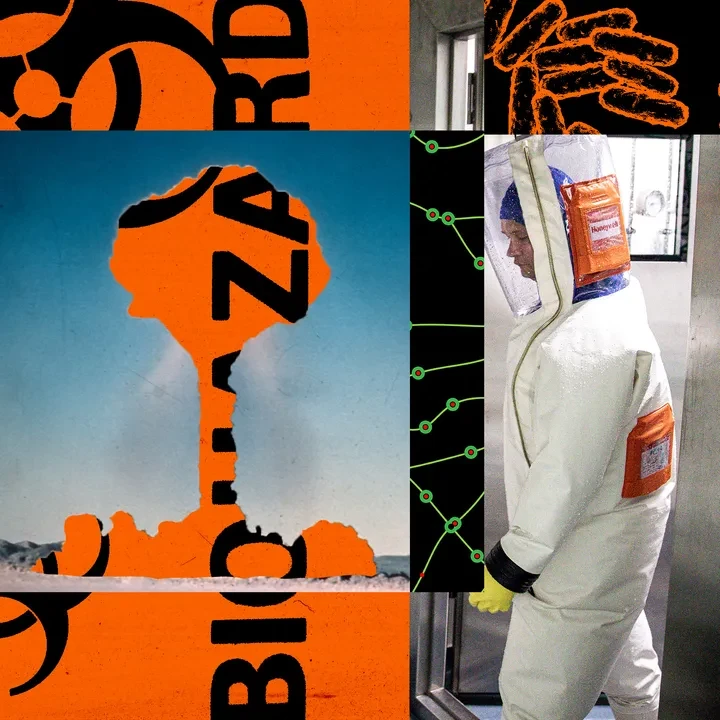
This is the core, sticky paradox of nearly all transformative technology, including AI: genetic engineering is an inherently dual-use tool, one that can save millions or kill them on an unimaginable scale. As a former molecular biologist, I have covered the global gain-of-function research debate for decades, long before generative AI was a mainstream conversation topic. In my experience, most researchers working with high-risk pathogens default to a predictable stance: publishing findings is always better than suppressing them, and studying which genetic traits turn ordinary microbes into human threats is inherently worthwhile — no matter the catastrophic risks of an accidental, or deliberate, large-scale release. I have long doubted that this recklessness serves humanity’s best interests, and those doubts only deepened after reading veteran national security reporter Annie Jacobsen’s latest release, Biological War: A Scenario — the followup to her 2023 bestseller Nuclear War: A Scenario.
Jacobsen, who has spent 20+ years interviewing high-ranking current and former military, intelligence, and public health officials who spend their careers mapping existential global risks, brings unmatched access to classified planning conversations to both books. The most disturbing thread running through both volumes is not the risk of mass death itself, but the almost comical lack of preparedness and gaping flaws in U.S. government response frameworks. America’s Cold War-era nuclear war playbook was, and remains, total madness. And as Jacobsen lays out clearly in her new work: the U.S. has almost no functional defense against a large-scale biological attack. Below is our edited, condensed conversation.
On why biothreats keep her up at night more than nuclear weapons
Michael Mechanic: You’ve now written deep, scenario-focused deep dives on both nuclear and biological war. Which one haunts your sleep more?
Annie Jacobsen: The Defense Department’s official WMD threat spectrum document, which I reprinted in the book, lists nuclear arms as the most destructive force on the planet. But I was shocked to see biological weapons rank as an extremely close second — and I’m convinced they are the single greatest overall existential threat to humanity today. The barrier to entry for bioweapon creation is absurdly low, especially compared to nuclear arms. To build a nuclear bomb, you need rare, weapons-grade fissile material, then an entire arsenal of delivery systems: ICBMs, nuclear-capable stealth bombers, ballistic missile submarines. Only a full sovereign state can pull that off.
For bioweapons? The list of people who have access to deadly, transmissible pathogens and the lab equipment to edit their genomes is in the thousands. There are only 9 nuclear-armed states on the planet, tasked with securing their nuclear stockpiles from misuse. There are 3,600 BSL-3 and BSL-4 high-containment labs spread across every continent. That disparity is terrifying.
On why accidental lab leaks are far more likely than a deliberate bioweapon attack
MM: Your scenario opens with an accidental release of a weaponized plague strain from a top-security Russian biolab. Do your sources confirm accidental leaks are a bigger threat than a bad actor intentionally deploying a bioweapon?
AJ: By a huge margin, for two clear reasons. First, the CIA and allied intelligence agencies run extremely aggressive counterproliferation programs to disrupt terrorist bioweapon operations, and they have successfully shut down multiple plots in the past. Second, the only people deranged enough to release a deadly transmissible pathogen into the open world, knowing full well the blowback will create a global pandemic that will almost certainly kill them too, are people with an explicit death wish. That is a very small subset of even extremist groups.
Compare that to the thousands of scientists, state research programs, and university teams around the world doing gain-of-function work on hyper-virulent pathogens in high-containment labs. Human error is statistically inevitable. We already have well-documented cases: a Soviet scientist named Nikolai Ustinov accidentally pricked himself with a syringe full of uncurable Marburg virus in a BSL-4 lab, and died a horrific hemorrhagic fever death in a sealed isolation ward. The odds of a similar modern accident are exponentially higher than the odds of a deliberate release.
On the intersection of AI and biothreats
MM: You didn’t cover AI-enabled bioengineering in the book, but lately we’re flooded with reports of bad actors using AI to shortcut bioweapon design. Did your sources see that as a major amplifier of risk?
AJ: It wasn’t even a question of whether they saw the risk: they see it as a catastrophic game-changer. I intentionally left AI out of the core scenario to demonstrate that even without AI, a single scientist in a well-equipped lab can tweak a naturally occurring pathogen to create a near-extinction level pandemic. But in my acknowledgements, I reference the terrifying concept of “mirror life” explained to me by leading presidential biosecurity advisor David Relman: a synthetic, AI-engineered pathogen that could wipe out every last human on the planet. My book is called Biological War: A Scenario, not Biological War: The Worst Case Scenario, because the worst case is far worse than anything I could put in print.
Since the book launched, I was invited to tour the Fort Detrick BSL-4 lab to do a Q&A with staff there. The lab director told me the book made their phones ring off the hook, as every staff member’s friends and family asked them: Is this real? Could this actually happen? He said I “said the quiet part out loud” — the risk was always there, but no one who works in these labs is going to flag it publicly, because their job is focused on developing countermeasures, not sounding the alarm for the general public. Almost every question the lab staff asked me was about AI-enabled biothreats. This conversation isn’t just happening in classified briefings: it’s happening in grocery store aisles and at the highest levels of national security.
On the classified “devolution” continuity of government plan
MM: I was fascinated to learn that “devolution” is an official U.S. government disaster response plan — the same term the 80s new wave band Devo used to describe the collapse of American culture. Can you walk through what that actually means?
AJ: That reference went right over my head! The real devolution plan, which I learned about from former FEMA director Craig Fugate, is a worst-case continuity of government protocol. If a catastrophic global biothreat triggers widespread anarchy as people panic over shortages of life-saving countermeasures, the president will invoke the Insurrection Act, and the U.S. government will move to COGCON 1, the highest possible continuity emergency status.
At that point, a pre-vetted, pre-selected group of individuals with no connection to elected or appointed public office — all of whom have signed binding contracts committing to their role — immediately evacuate the DC metro area for a network of classified, hardened bunkers spread across the U.S. designated hot, warm, and cold sites. Their entire job is to ride out the apocalypse in those bunkers, so they can rebuild the federal government after the catastrophe passes. It sounds straight out of a dystopian novel, and most of the plan remains fully classified. The name only leaked to the press a decade ago, so FEMA declassified the title to avoid further public scrutiny.
On why weaponized plague was the perfect choice for the scenario
MM: You centered your scenario on a genetically edited, 100% lethal weaponized strain of Yersinia pestis, the bacterium that causes plague. Why pick that specific pathogen?
AJ: Plague is such a perfect, dark metaphor for the dual nature of modern science. We all think plague is a medieval disease eradicated by antibiotics, but today we have the technology to fully erase that medical countermeasure via genetic engineering. The Soviet Union was building a superweaponized, antibiotic-resistant plague chimera as far back as the 1980s, when genetic engineering was still in its infancy. Their plan was to release it across Western Europe, kill every civilian there, leave all the infrastructure intact, then roll in and take over after inoculating their own entire population.
State Department public statements confirm that the old Soviet bioweapons program was fully absorbed into the modern Russian state bioresearch program, so that technology is almost certainly still out there. It’s a perfect reminder that the same science we use to save lives can be turned against us, and we are far less prepared for that outcome than anyone in power will admit. The point of writing this book isn’t to cause panic — it’s to create pressure to fix these gaps before a real disaster hits.